
Optimizing for voice search in 2025–2026 requires a shift toward conversational, long-tail keywords that reflect how people naturally speak to devices like Google Assistant, Siri, and Alexa. Websites need to include question-based headings, FAQ sections, and concise answers—ideally within 30 words—to improve their chances of appearing in featured snippets or “Position Zero,” which voice assistants often read aloud. Local SEO also becomes essential, as many voice searches involve “near me” queries, making it important to optimize Google Business Profile and use location-specific terms. Since most voice searches happen on mobile, fast loading speeds and responsive design are critical for capturing and retaining this traffic.
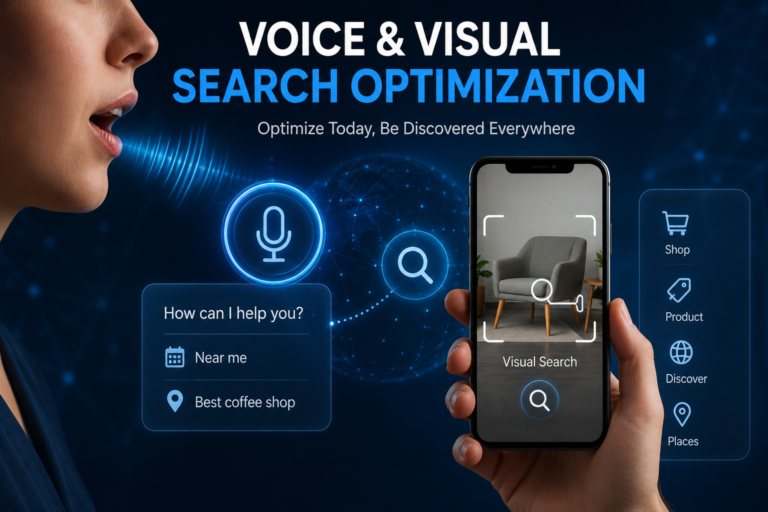
A unified multimodal strategy integrates voice, visual, and text-based optimization to create a seamless experience across devices and search types. Structured data plays a central role, helping AI-powered search engines understand both written and visual elements while enhancing eligibility for rich snippets and AI summaries. Combining visuals with transcripts, captions, and contextual text ensures content is discoverable through voice, visual, and traditional search. Mobile-first design ties everything together, as most voice and visual searches happen on mobile devices. Ultimately, businesses that optimize for both modes together—using schema markup, strong metadata, and intent-focused content—will dominate in the era of AI-driven, multimodal search.
Visual search optimization, driven by Google Lens, Pinterest, and eCommerce AI tools, focuses on high-quality, descriptive images and videos that help search engines understand visual content accurately. This involves using detailed alt text, keyword-rich file names, meaningful captions, and even EXIF or geotag data for added context. Structured data such as Product, Recipe, and Video schema helps search engines match visual content with user intent and appear in rich results. Modern image formats like WebP and AVIF are crucial for faster delivery, improving both user experience and ranking potential. Clear, relevant thumbnails and visually informative media increase the chances of being surfaced by visual search engines.
A unified multimodal strategy integrates voice, visual, and text-based optimization to create a seamless experience across devices and search types. Structured data plays a central role, helping AI-powered search engines understand both written and visual elements while enhancing eligibility for rich snippets and AI summaries. Combining visuals with transcripts, captions, and contextual text ensures content is discoverable through voice, visual, and traditional search. Mobile-first design ties everything together, as most voice and visual searches happen on mobile devices. Ultimately, businesses that optimize for both modes together—using schema markup, strong metadata, and intent-focused content—will dominate in the era of AI-driven, multimodal search.
